
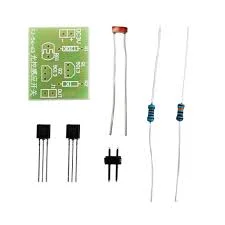
Light Controlled Induction Switch Kit
Turn light into power with the Light Controlled Induction Switch Kit; hands‑on STEAM fun for curious creators!
+0 points earned
Light Controlled Induction Switch Kit – Starter Kit
The Light Controlled Induction Switch Kit lets students build a hands‑on, non‑contact switch that turns on an LED or motor whenever a beam of light is broken. Using a simple infrared LED‑photodiode pair, a small induction coil, and a compact microcontroller, learners create a “light‑gate” that converts light intensity into a magnetic field, which then actuates a relay or solid‑state switch. The kit comes fully wired, with clear, color‑coded connectors and a step‑by‑step guide, so students can assemble the circuit in under an hour and see instant results.
In the process, students explore core STEAM concepts: optics (how light travels and is detected), electromagnetism (induction and magnetic fields), electronics (signal conditioning, relay operation), coding (programming the microcontroller to filter noise and set thresholds), and engineering design (troubleshooting, iterative testing, and real‑world applications such as automatic doors or safety sensors). The curriculum booklet expands each topic with experiment ideas, discussion prompts, and extension challenges that integrate math (calculating light intensity and coil turns) and art (designing light‑responsive installations).
Key Features
- All‑in‑one starter pack: infrared LED, photodiode, copper induction coil, microcontroller board, relay, breadboard, and reusable jumper wires.
- Visual, step‑by‑step instructions plus QR‑linked video tutorials for every build stage.
- Adjustable sensitivity slider and programmable threshold for customizable projects.
- Compatible with popular coding platforms (Arduino IDE, MakeCode) and STEM classroom software.
Because the kit blends physics, engineering, coding, and creative problem‑solving, it provides a perfect entry point for interdisciplinary STEAM learning. It sparks curiosity by turning an invisible beam of light into a tangible, controllable action, encouraging students to experiment, iterate, and see how multiple scientific principles work together in real‑world technology.